If you have asked three web designers for a quote, you have probably received three very different numbers. One says $800, another says $4,000, and an agency comes back with $15,000. So what should a WordPress website cost for a small business going into 2027?
I build WordPress websites and WooCommerce stores for clients in the USA, UK, Europe, Canada, Australia and New Zealand, and this is the question I hear most. Below you will find realistic price ranges in your own currency, what actually drives the price up or down, the yearly running costs most quotes leave out, and how to get a quote you can trust.
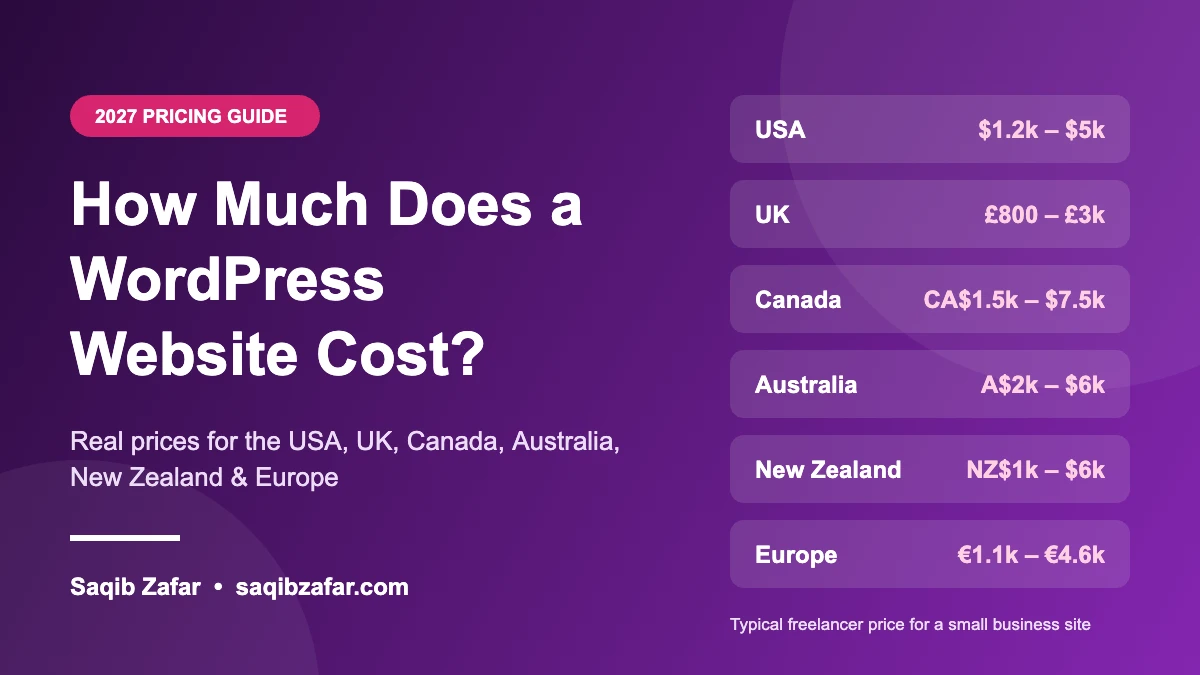
Quick answer: a typical 5–10 page small business website on WordPress costs roughly $1,200–$5,000 with an experienced freelancer, or $3,000–$12,000+ with an agency. On top of that, plan for a few hundred dollars a year for your domain, hosting, premium plugins and maintenance.
WordPress website cost by country (2026–2027 prices)
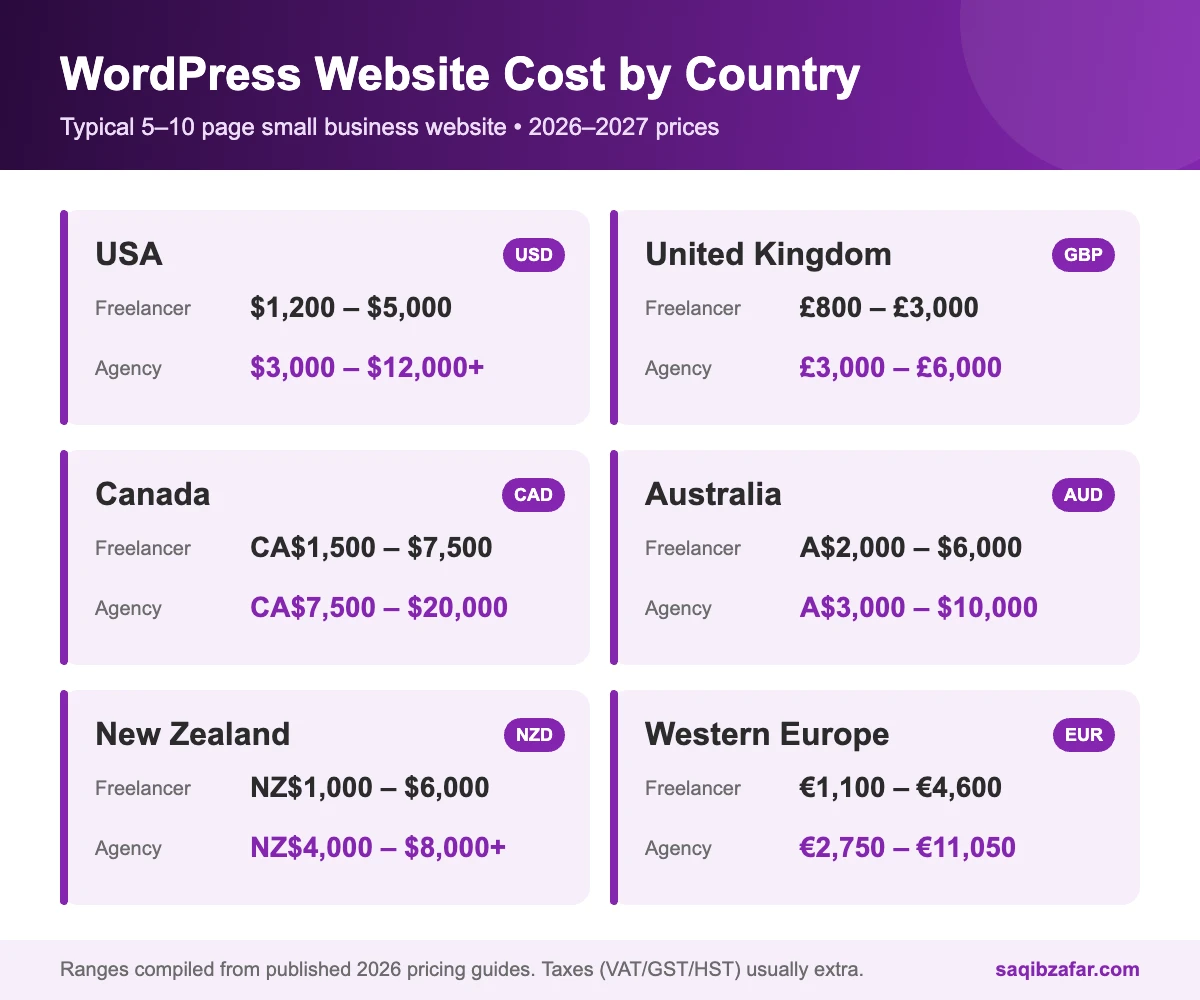
Prices vary a lot by market, mainly because of local hourly rates. The table below summarizes typical price ranges for a professionally built small business website (around 5–10 pages), based on published 2026 pricing guides from each country (sources at the end of this article).
| Market | Freelancer-built site | Agency-built site | Good to know |
|---|---|---|---|
| 🇺🇸 USA | $1,200 – $5,000 | $3,000 – $12,000+ | Larger, full-service agencies often quote $10,000 or more |
| 🇬🇧 UK | £800 – £3,000 | £3,000 – £6,000 | London agencies usually start around £8,000 |
| 🇨🇦 Canada | CA$1,500 – $7,500 | CA$7,500 – $20,000 | Many small businesses land around CA$3,000–$8,000; quotes usually exclude GST/HST |
| 🇦🇺 Australia | A$2,000 – $6,000 | A$3,000 – $10,000 | Online stores commonly run A$10,000–$50,000 |
| 🇳🇿 New Zealand | NZ$1,000 – $6,000 | NZ$4,000 – $8,000+ | Most quotes exclude 15% GST |
| 🇪🇺 Western Europe | €1,100 – €4,600 | €2,750 – €11,050 | Covers Germany, Netherlands, France, Spain, Italy and the Nordics |
These are typical ranges, not fixed prices. A one-page site can cost less, and a store with hundreds of products, bookings or custom integrations can cost a lot more.
What you are actually paying for
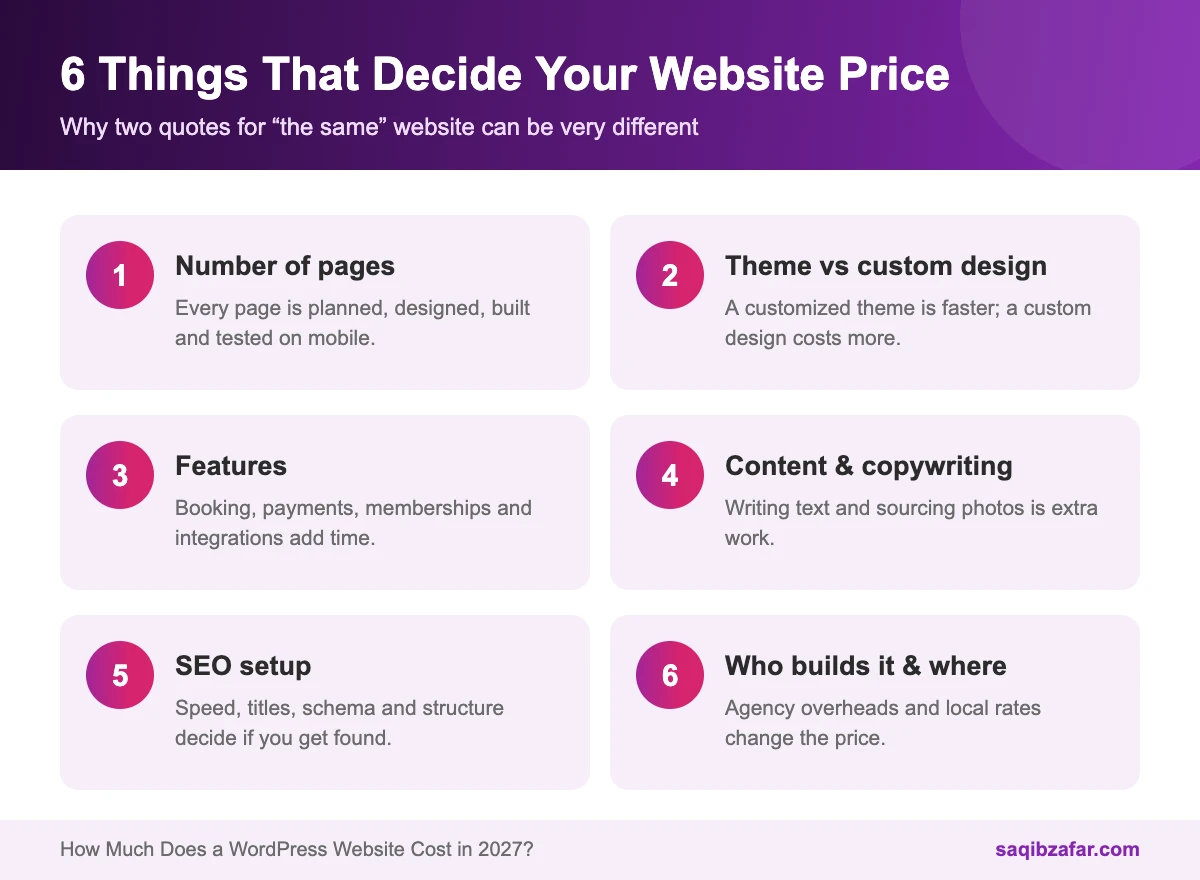
Two quotes can look similar on paper and still describe very different websites. These are the factors that move the price the most:
1. Number of pages
Every page needs to be planned, designed, built and tested on mobile. A 5-page brochure site (Home, About, Services, Contact plus one more) is the most common small business project. Each extra service or location page adds time.
2. Theme-based vs custom design
A premium theme customized to your brand is fast and affordable. A fully custom design, built from scratch around your brand and your customers, takes longer and costs more, but it will look unique and can be shaped around how people actually buy from you.
3. Features and functionality
Contact forms are cheap. Online booking, payment gateways, membership areas, multi-language content, product filters and integrations with CRMs or accounting tools all add development and testing time. An online store (WooCommerce) is usually the biggest jump in price because of payments, shipping, tax and product setup.
4. Content and copywriting
If you provide your own text and photos, you save money. If you need someone to write your pages, take photos or source images, budget for it separately. Good content is also what helps you rank on Google.
5. SEO setup
A site that is fast, mobile-friendly and has proper titles, meta descriptions, headings, image alt text, a sitemap and schema markup is in a far better position to get found. Some cheap builds skip all of this, which costs you traffic later. See what I include in website SEO services.
6. Who builds it, and where they are based
The same project can be quoted very differently by a big-city agency, a regional studio and an experienced remote freelancer. You are paying for overheads as well as skill. More on that below.
Ongoing costs most quotes leave out
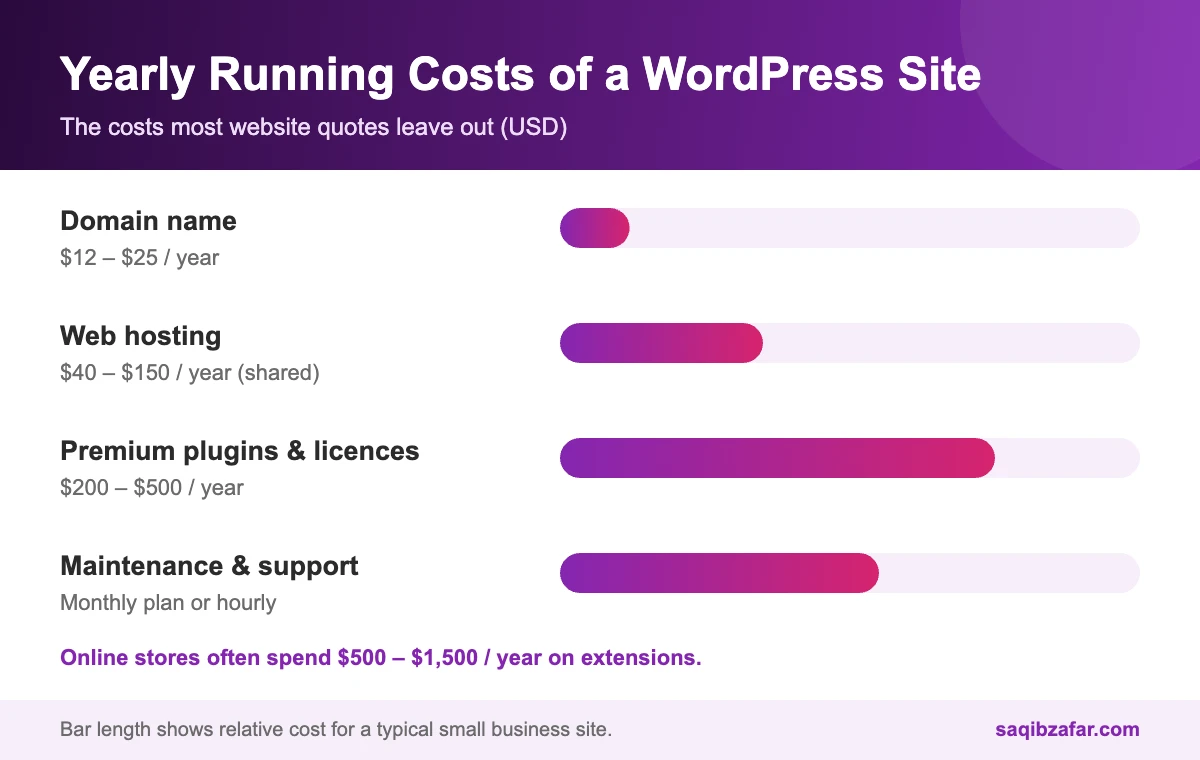
The build is a one-time cost, but every WordPress website has running costs. Make sure you know who pays for what before you sign:
| Item | Typical cost | Notes |
|---|---|---|
| Domain name | $12 – $25 per year | .com, .co.uk, .ca, .com.au, .co.nz, etc. |
| Web hosting | $40 – $150 per year (shared) and more for managed hosting | Faster, managed hosting costs more but saves time and improves speed |
| Premium plugins and theme licences | $200 – $500 per year | Online stores often spend $500–$1,500 per year on extensions |
| Maintenance and support | Varies (monthly plan or hourly) | Updates, backups, security checks and small content changes |
Some UK guides recommend budgeting 30–50% of the build cost every year for hosting, licences, maintenance and support. That is on the high side for a simple site, but it is a useful reminder that a website is not a one-off purchase.
DIY vs freelancer vs agency: which is right for you?
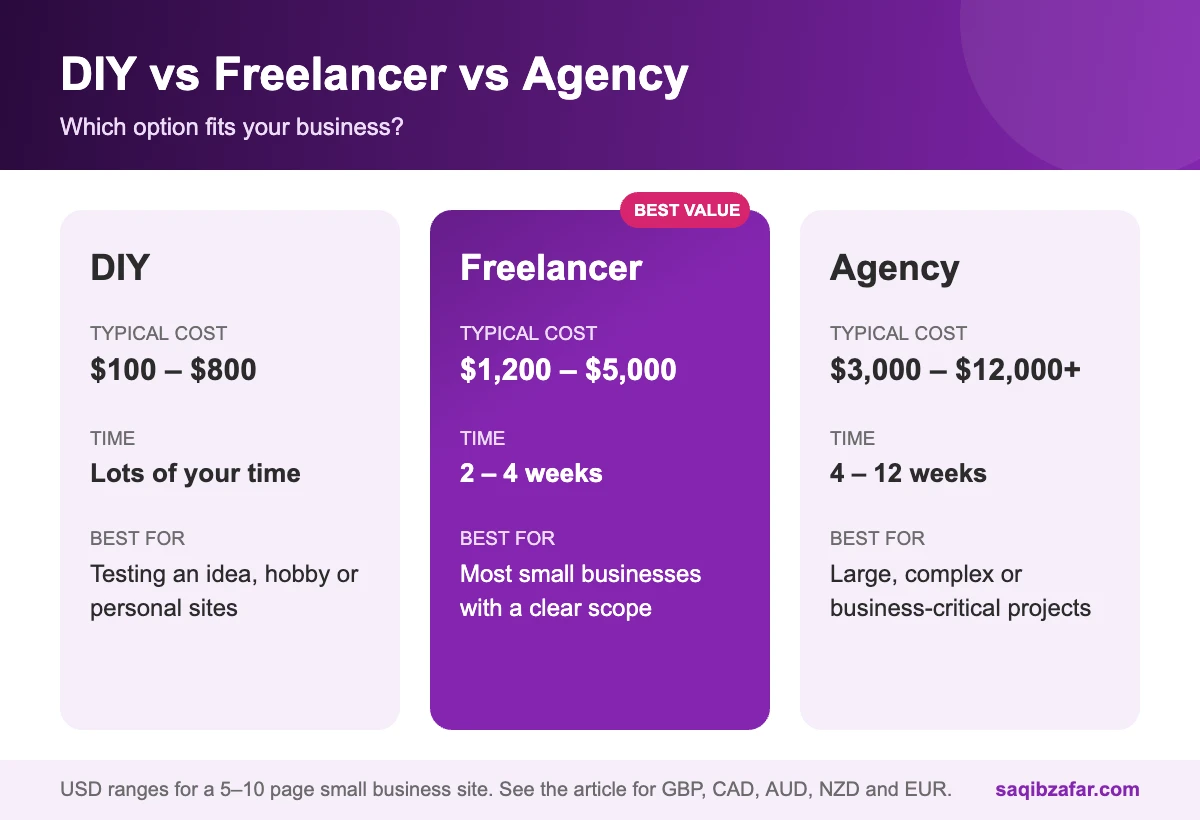
- DIY (WordPress, Wix or Squarespace): the cheapest in money, the most expensive in time. Fine for testing an idea or a personal site, but most business owners end up with a slow, hard-to-find site.
- Freelancer: the best value for most small businesses with a clear scope. You work directly with the person building your site, and you usually get a professional result at a much lower price than an agency.
- Agency: worth it for large, complex or business-critical projects that need a whole team (strategy, design, development, copywriting and project management).
Why a remote freelancer can cost less without cutting quality
Web development is done online, so where your developer lives changes the price more than the quality. One 2026 comparison found the same custom WordPress build quoted at about $14,000 by a coastal US agency and around $3,200 by a solo freelancer, with very similar deliverables.
If you hire remotely, protect yourself with a few simple checks:
- Look at real, live websites they have built, not just screenshots. Here is my portfolio of live projects.
- Read reviews from clients in your country.
- Make sure the domain and hosting are in your name, and that you get full admin access.
- Agree a written scope, a fixed price and a timeline before work starts.
- Pay in stages (for example 50% to start, 50% at launch) rather than everything upfront.
- Check that they can work in, or overlap with, your time zone for calls.
How to get an accurate quote
The more detail you give, the closer the quote will be to the final price. Before you contact anyone, prepare:
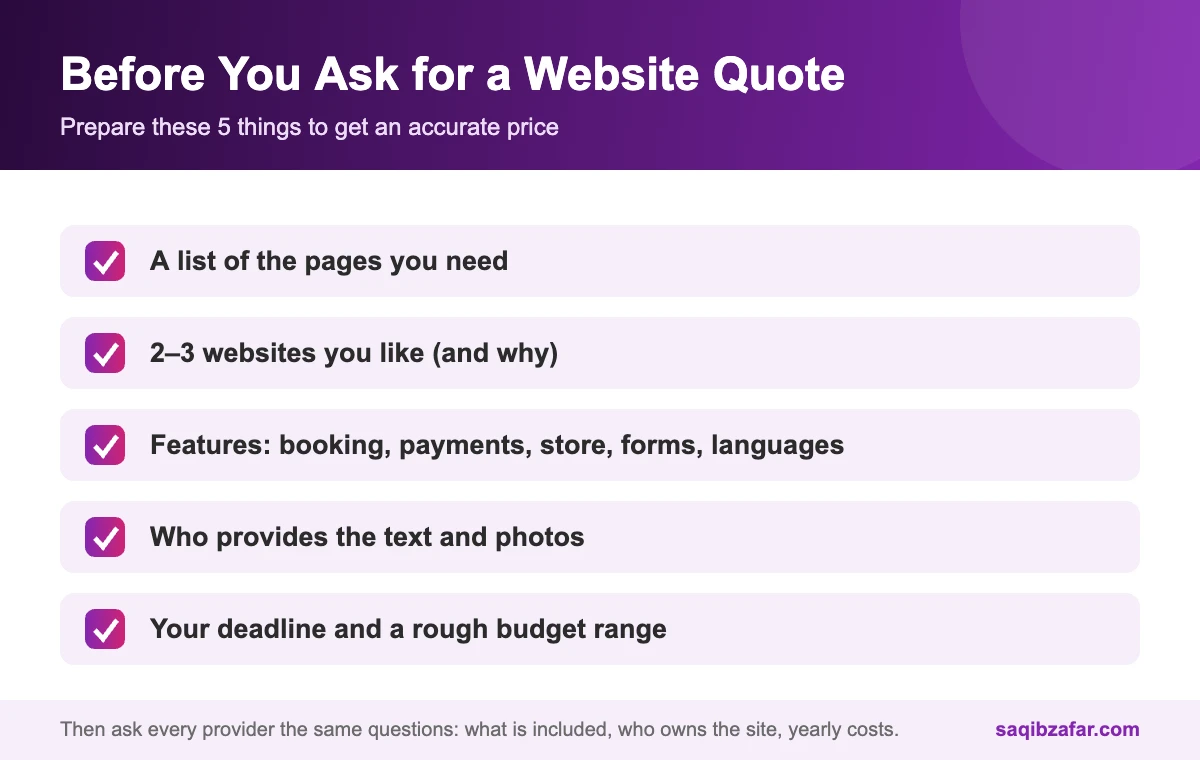
- A list of the pages you need.
- Two or three websites you like (and what you like about them).
- The features you need: booking, payments, store, forms, multilingual, etc.
- Who will provide the text and photos.
- Your deadline and a rough budget range.
Then ask every provider the same questions: what is included, how many revisions you get, who owns the site, what happens after launch, and what the yearly costs will be.
Red flags in a cheap website quote
- The domain or hosting will be registered in the developer’s name, not yours.
- No mention of mobile design, speed or basic SEO.
- No backups or security plan after launch.
- The price is very low but the scope is vague (“a professional website”).
- You will not get admin access to your own site.
Frequently asked questions
Is WordPress free?
The WordPress software is free and open source. What you pay for is the domain, hosting, any premium themes or plugins, and the time of the person who designs and builds your site.
How long does it take to build a WordPress website?
Most small business sites take about 2–4 weeks once the content is ready. Fully custom designs or online stores usually take 6–12 weeks.
Does a WooCommerce store cost more than a normal website?
Yes. Payments, shipping, tax settings, product setup and extra testing make online stores more expensive than brochure sites, and they usually have higher yearly plugin costs too.
Do website quotes include tax?
Usually not. Check whether your quote includes VAT (UK and Europe), GST/HST (Canada) or GST (Australia and New Zealand, where it is 10% and 15% respectively).
Should I pay hourly or a fixed price?
For a website with a clear scope, a fixed price is safer because you know the total upfront. Hourly billing makes more sense for ongoing changes and maintenance.
Want an exact price for your website?
I am Saqib Zafar, a freelance WordPress developer and SEO expert. I build fast, SEO-ready websites and WooCommerce stores for small businesses in the USA, UK, Europe, Canada, Australia and New Zealand, with free revisions and clear, fixed pricing.
Tell me what you need, or send me your current website, and I will give you a free website audit and a fixed quote. Get your free quote or see my WordPress website development services.